
Written by James Rogers
I watched Brown and Bonded as a white, non-Indigenous, first-generation Canadian man who has spent much of the past fifteen years working in and around animal services, including animal shelters, veterinary access programs, animal control, and community animal management in rural and remote Indigenous communities.
That context matters.
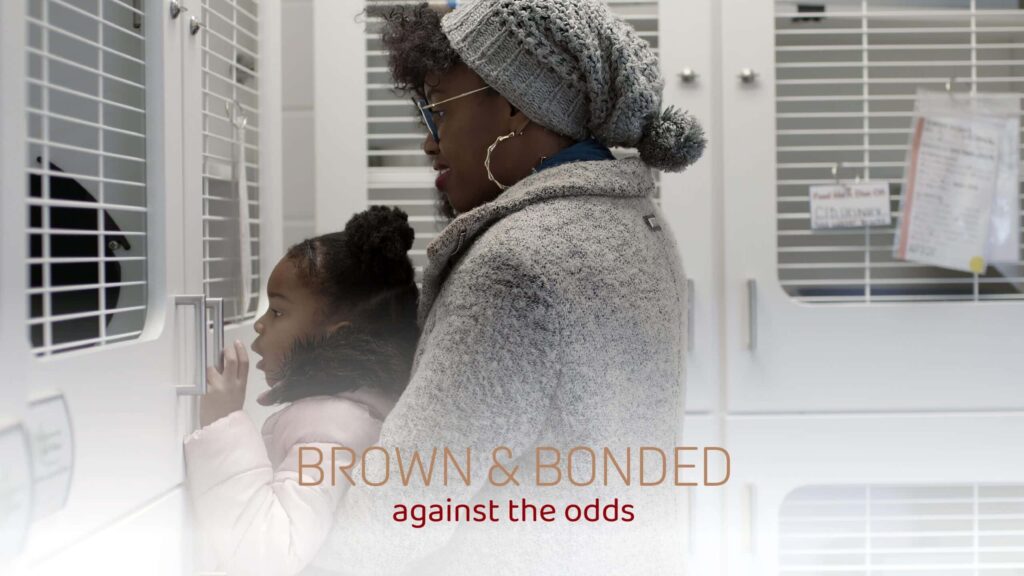
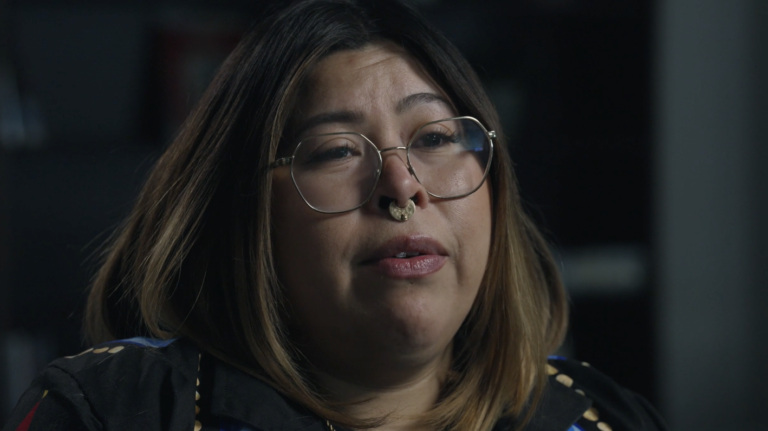
Brown and Bonded, a documentary from Companions and Animals for Reform and Equity (CARE), centres experiences that are not mine. It examines what happens when Black, Indigenous and other people of colour encounter an animal welfare sector that often sees itself as compassionate and progressive, but whose policies, practices, workforce and assumptions can reproduce the same racial and economic inequities found throughout society.
The film makes its argument quickly.
When veterinary services are concentrated far from the people who need them, is the problem simply that people are not accessing veterinary care?
The animal welfare workforce remains overwhelmingly white and female. The veterinary profession is even less representative of the communities it serves. CARE’s research has found striking levels of implicit bias within animal welfare, including against people of colour and, at particularly high levels, against people with low socioeconomic status.
Those statistics are powerful. But Brown and Bonded is strongest when it shows what those numbers look like in people’s lives.
A family wants to adopt an animal but is judged unsuitable because of where they live, their housing, their income or assumptions made about their neighbourhood. Someone needs veterinary care but cannot find affordable services nearby. A person facing a veterinary bill they cannot pay is presented with an appalling choice: somehow find the money or surrender an animal they love to an organization that can then obtain treatment and rehome that same animal.
The film also explores a more uncomfortable part of the animal rescue economy: the way images and stories of animals from marginalized communities can be used to raise money while the people living in those communities are portrayed, implicitly or explicitly, as part of the problem.
There is plenty here for shelters, rescues and veterinary professionals to reflect on.
But as I watched, I found myself increasingly looking past the individual organizations and asking another question:
What keeps creating these situations in the first place?
Look at the map
One of the most powerful sequences in Brown and Bonded uses maps to show the geography of animal services.
Veterinary clinics and other animal resources are not distributed evenly. In places such as San Bernardino, California, and Red Lake, Minnesota, the film illustrates the physical separation between many animal services and marginalized, predominantly BIPOC communities.
For me, those maps changed the question.
When veterinary services are concentrated far from the people who need them, is the problem simply that people are not accessing veterinary care?
Or is the problem that veterinary care is not accessing people?
That distinction matters.
We often build services in one place and then measure access by asking whether people can reach them. We tell people to find transportation, take time away from work, arrange childcare, travel for hours, navigate unfamiliar systems and somehow absorb the cost.
Then we are surprised when some people do not make it through the door.
Perhaps sometimes the better answer is to move the door.
Mobile veterinary services are one obvious example. Community-based clinics are another. So are veterinary subsidies, locally trained animal service workers, transportation programs, kenneling infrastructure and other services designed around the realities of a particular community.
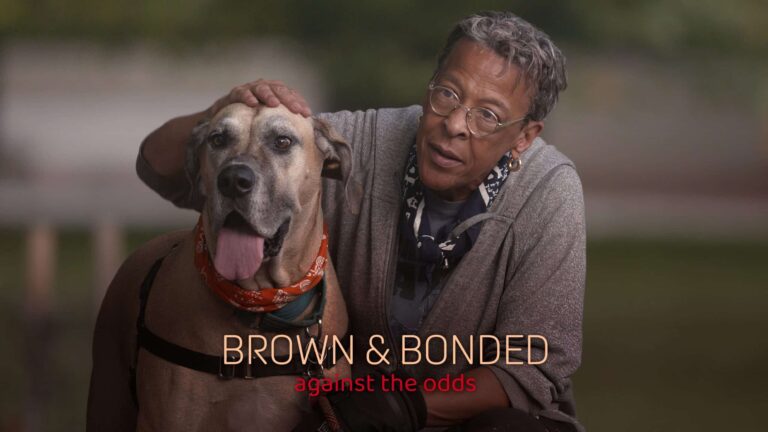
A line in the film from one of the veterinarians from The Critter Fixers captures this beautifully. He shares that when a dean or advisor asks where they are supposed to find BIPOC veterinary students, his answer is essentially: go where they are. If you’re looking for peaches, you don’t go to an apple orchard, right?
That principle extends far beyond veterinary recruitment.
If you want marginalized communities to have access to veterinary care, go where they are.
If you want BIPOC perspectives shaping animal welfare policy, go where they are.
Better still, make room for those communities to shape the policies, programs and institutions themselves.
When the stick does not work
The film also caused me to think about my own experience working as an animal bylaw officer in Indigenous communities.
Animal control is traditionally built around carrots and sticks. Educate people. Offer some assistance. But ultimately, enforce the rules through licensing fees, fines, seizures and other penalties.
It did not take me long to realize that many of those tools made little sense in the communities where I was working.
A fine is not much of an enforcement tool where many people have little disposable income. Requiring veterinary treatment does not accomplish much if attainable veterinary care is hours away. Seizing a dog may remove one immediate concern, but it can leave an animal shelter with an expensive, poorly socialized dog that is difficult to place, while the family may simply acquire another dog.
The system can churn without solving anything.
I encountered the same problem from the shelter side.
Rehoming animals was difficult where I worked partly because the region itself had so little animal-supporting infrastructure. Affordable veterinary care was scarce. Free-roaming dogs created additional safety challenges for placing dogs and cats in some communities.
And cost barriers were certainly not confined to people living in poverty. I have known people with substantial incomes who refused to spay a cat after being quoted well over a thousand dollars because they believed the price itself was unreasonable.
That experience makes me cautious about explaining animal-related problems primarily through individual behaviour.
Sometimes the behaviour is only the most visible part of the system.
Beyond bad actors
There are moments in Brown and Bonded when it would be easy to leave angry at rescues, shelters or veterinary clinics.
Some deserve that scrutiny.
Discriminatory adoption policies should change. Racial and class bias should be confronted. Organizations should not exploit marginalized communities as sources of compelling fundraising photographs while denying those same communities meaningful investment and decision-making power. Families should not have to surrender animals they love merely to unlock veterinary treatment.
But replacing a few bad practices will not be enough.
If one rescue becomes less discriminatory but the community still has no veterinary clinic, little transportation, inadequate housing, no local animal services and limited economic opportunity, the underlying conditions remain.
Someone else will eventually encounter the same crisis.
This is where Brown and Bonded pushed me beyond what we usually call “animal welfare.”
The issues depicted in the film are also about public health, community safety, infrastructure, education, housing, transportation and economic development.
Economic challenges appear repeatedly in these stories, but they should not be understood simply as an attribute of an individual animal guardian.
Sometimes poverty describes the entire resource environment surrounding a community.
No veterinarian.
No kennels.
No trained local staff.
No affordable transportation.
Little government revenue.
No realistic way to comply with rules written somewhere else.
Viewed from that perspective, many so-called animal welfare problems begin to look very different.
If you’re looking for peaches, you don’t go to an apple orchard, right?
– Dr. Hodges, Critter Fixers
So who needs to watch this film?
The obvious answer is people working in animal welfare.
Shelter executives should see it. Rescue organizations should see it. Veterinarians should see it. Veterinary associations and schools should see it. Boards should see it.
And many will undoubtedly have a “yeah, but…” response.
Yeah, but we have to make sure adopters are responsible.
Yeah, but veterinary medicine is expensive to provide.
Yeah, but we cannot put a clinic everywhere.
Yeah, but those communities are difficult to serve.
Some of those responses may even contain legitimate operational concerns.
But Brown and Bonded asks viewers to examine who has historically been expected to absorb those difficulties.
That is why I think another audience may be even more important.
- Politicians should see this film.
- Senior public servants should see it.
- Foundations and major animal welfare funders should see it.
- Corporate philanthropists should see it.
- Public health leaders should see it.
- People deciding where veterinary schools are built, who gets admitted to them and how veterinary education is financed should see it.
- And anyone deciding where the next million dollars in animal-related funding goes should see it.
Because these are the people with some ability to change the map.
They can help decide whether resources continue flowing toward crisis response and removing and rehoming animals from underserved communities, or whether more of that investment instead builds lasting capacity within those communities.
They can ask whether funding another rehoming program is always more useful than funding a local animal services coordinator, veterinary access, kenneling, transportation, education or community-designed animal management system.
They can help ensure BIPOC and marginalized communities are not simply consulted after programs are designed, but represented at the tables where priorities and funding decisions are established.
And perhaps they can recognize that improving animal health and safety in underserved communities may require investments that do not have “animal welfare” written on them at all.
Economic development may be an animal welfare intervention.
Housing may be an animal welfare intervention.
Transportation may be an animal welfare intervention.
Local employment and training may be animal welfare interventions.
From bonded to belonging
Near the end of Brown and Bonded, an interviewee is asked a deceptively simple question: if you operated a rescue organization, what would you put on the adoption application?
It is a clever way to turn critique into possibility.
What would we build differently?
For me, that question extends well beyond adoption applications.
What would an animal service system look like if its objective was not to determine whether someone was sufficiently worthy of an animal, but to help people and animals live safely and successfully together?
What would veterinary access look like if we started with the geography, economics and realities of the people who currently have the least access?
What would animal management look like if communities designed the systems rather than having outside models imposed upon them?
And what would happen if we invested as much creativity and money in keeping healthy bonds intact as we currently invest in dealing with crises after those bonds have become difficult to sustain?
Brown and Bonded makes an important case for confronting racism and classism within animal welfare.
I came away thinking its implications are even larger.
The film begins by asking us to examine who animal welfare allows through the door.
By the end, I was wondering who built the door, where they chose to put it, who holds the keys, and who was sitting at the table when those decisions were made.
That is why Brown and Bonded should be seen far beyond the animal welfare sector.
It should be seen by anyone with the power to decide where the next veterinarian, clinic, program, grant, job or seat at a decision-making table goes.
Because becoming better at saying yes to people matters.
But the larger challenge is building communities and systems in which far fewer people ever need to ask permission in the first place.
About the author
James Rodgers is Executive Director of Increased ACCESS and is helping to develop its Indigenous SPCA initiative, which approaches community animal management through the lenses of public health, community safety, infrastructure and Indigenous self-determination. He has spent more than a decade working alongside rural and remote Indigenous communities on animal services, veterinary access and community animal management.
— Get REDI Copper Certified —
REDI Copper offers those within the Animal Care and Control industry an opportunity to better understand both personal and social biases as they relate to People of Color and marginalized communities, and not just understand that bias, but move beyond it for the sake of people and animals.