
By Thaddeus Johnson and Natasha Johnson
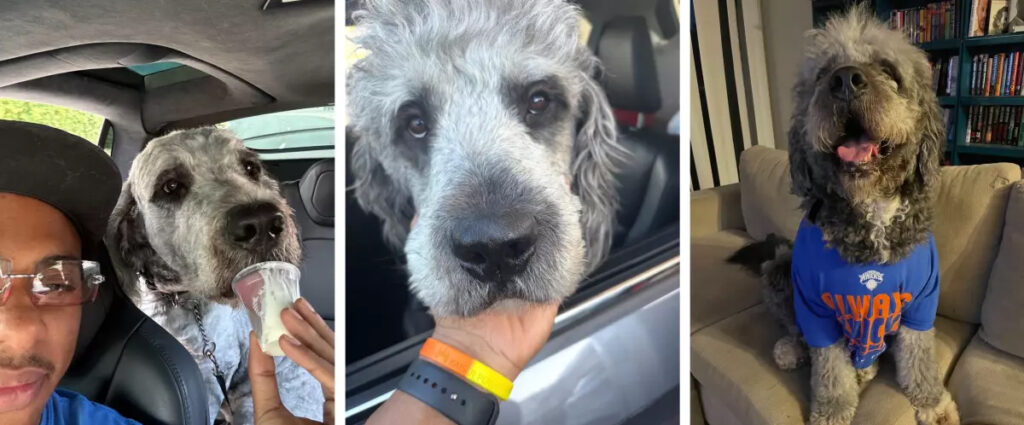
Photo from Vanessa Marseille
A 911 call ended with four gunshots in a hallway. On June 13, Los Angeles officers went to Marie Marseille’s apartment after someone reported a woman screaming. The screams came from a celebration of the New York Knicks’ NBA Finals win. Minutes later, an officer shot and killed Jameson, Marseille’s two-year-old, 106-pound golden Saint Bernard doodle, outside her door.
LAPD says Jameson charged; his family says he did not. Edited body-camera footage shows Jameson, wearing a Knicks jersey, barking, stepping into the hallway, pausing, then barking again. An officer fires four shots.
A 2020 review of LAPD and Los Angeles County Sheriff’s Department records from 2010 to 2017 found dog killings clustered in low-income communities of color.
The footage cannot settle the case, but it raises two urgent questions: Why didn’t the officer follow LAPD’s Use of Force Guidelines which advise officers to deescalate dog attacks by using voice commands, chemical spray, baton, taser, kicks, and if needed deadly force? Did firing shots at that moment put others at risk? Marseille and another officer stood behind Jameson. A shot at a dog can endanger a resident, bystander or fellow officer. Dog shootings are not side stories. They test whether departments prepare officers to protect people, pets and themselves before firing.
These cases often fade into reports, lawsuits and outrage. For a child, a dog can be a steady companion. To some, animals are property; to others, they are family.
When police kill a pet, children see it. Neighbors hear it. Owners replay it. A person who needs help may wonder what calling 911 will cost.
To be sure, officers face risk. A barking dog in a narrow hall can frighten an officer and cause serious injury. No one should ask police to wait for a bite. The legal question is what a reasonable officer perceived, not whether they were injured first.
That standard does not erase a department’s duty to prepare its officers.
Officers encounter animals on welfare checks, warrants and service calls. Dogs bark when startled, excited, afraid or warning strangers away. Forced entry and cramped hallways can magnify risk.
Fear of animals varies. An officer who has been bitten or traumatized may read a barking dog through that experience. In the footage, one officer says he would not get bitten. Training should channel that reaction into tactics: time, distance, cover, clear commands and teamwork.
Nobody knows how often these encounters end in gunfire. The widely cited 10,000 figure is unverified because agencies generally do not track animal shootings.
Every shooting should produce a public record: why officers came, where people stood, the likely line of fire, commands and alternatives, animal-control availability, and location.
That transparency matters. A 2020 review of LAPD and Los Angeles County Sheriff’s Department records from 2010 to 2017 found dog killings clustered in low-income communities of color. It does not prove bias in every case. Still, it shows why departments should disclose where shootings happen.
In a fast-moving moment, I would have relied on instinct. And instinct is not a plan.
“We may never know if the officer shot Jameson because of racial bias towards the dog’s Black mom Marie Marseille, but it’s unreasonable to dismiss bias considering the mounting evidence of racial disparities within the criminal justice system”, says James Evans, CEO and Founder of Companions and Animals for Reform and Equity (CARE).
Perceptions about certain breeds can shape an encounter before an officer sees a dog’s behavior. Labels such as “pit bull” or “dangerous breed” carry a threat narrative. The difference between a playful retriever and a “dangerous” mixed-breed dog may say more about assigned fear than the dog.
Police departments already treat working animals as more than property. K-9s and mounted horses receive training, protection and honors. Civilian dogs may not serve the state, but they can still protect, comfort and anchor families.
This is not an argument that animals have the same rights as people. It is an argument that departments must prepare officers for encounters with pets, however they classify them.
Models already exist. Tennessee law calls for training on animal aggression, risky settings and least necessary force. Missouri’s Teddy’s Law proposal and the Justice Department’s COPS Office offer similar guidance.
One of us (Thaddeus) spent years in law enforcement without ever confronting a dangerous animal. I received no formal training and recall no serious discussion of how to handle one. In a fast-moving moment, I would have relied on instinct. And instinct is not a plan.
Training must answer a basic question: What should two officers do when a barking dog appears? When safe, create distance and cover. Close a door, ask the owner for help, call animal control, use a less-lethal tool or back away.
Before firing, officers should assess the backdrop. A shot at a dog can endanger people at the door, bystanders or fellow officers. Los Angeles has an animal shooting policy. The public deserves to know whether officers followed it and whether edited footage permits a fair assessment.
Cities can reduce risk without blaming owners. When safe, owners should put dogs in another room, behind a barrier or on a leash. Dispatchers should ask about animals and give that guidance early.
A crisis can make that impossible. An owner may be scared, injured, away from home or unable to control a dog. That cannot make avoidable gunfire inevitable. Emergency profiles can alert officers. Supervisors can slow a call or request animal control help. Those steps give everyone more choices before officers reach the door.
A family dog shot at its front door is not collateral damage. It is a failure of public safety. Real safety begins before the trigger is pulled, with fewer bullets at front doors and fewer families left grieving behind them.
— Get REDI Copper Certified —
REDI Copper offers those within the Animal Care and Control industry an opportunity to better understand both personal and social biases as they relate to People of Color and marginalized communities, and not just understand that bias, but move beyond it for the sake of people and animals.
Thaddeus L. Johnson, a former police officer, is a senior fellow at the Council on Criminal Justice and teaches at Georgia State University. Natasha N. Johnson is an assistant professor of educational studies and research at Augusta University.